
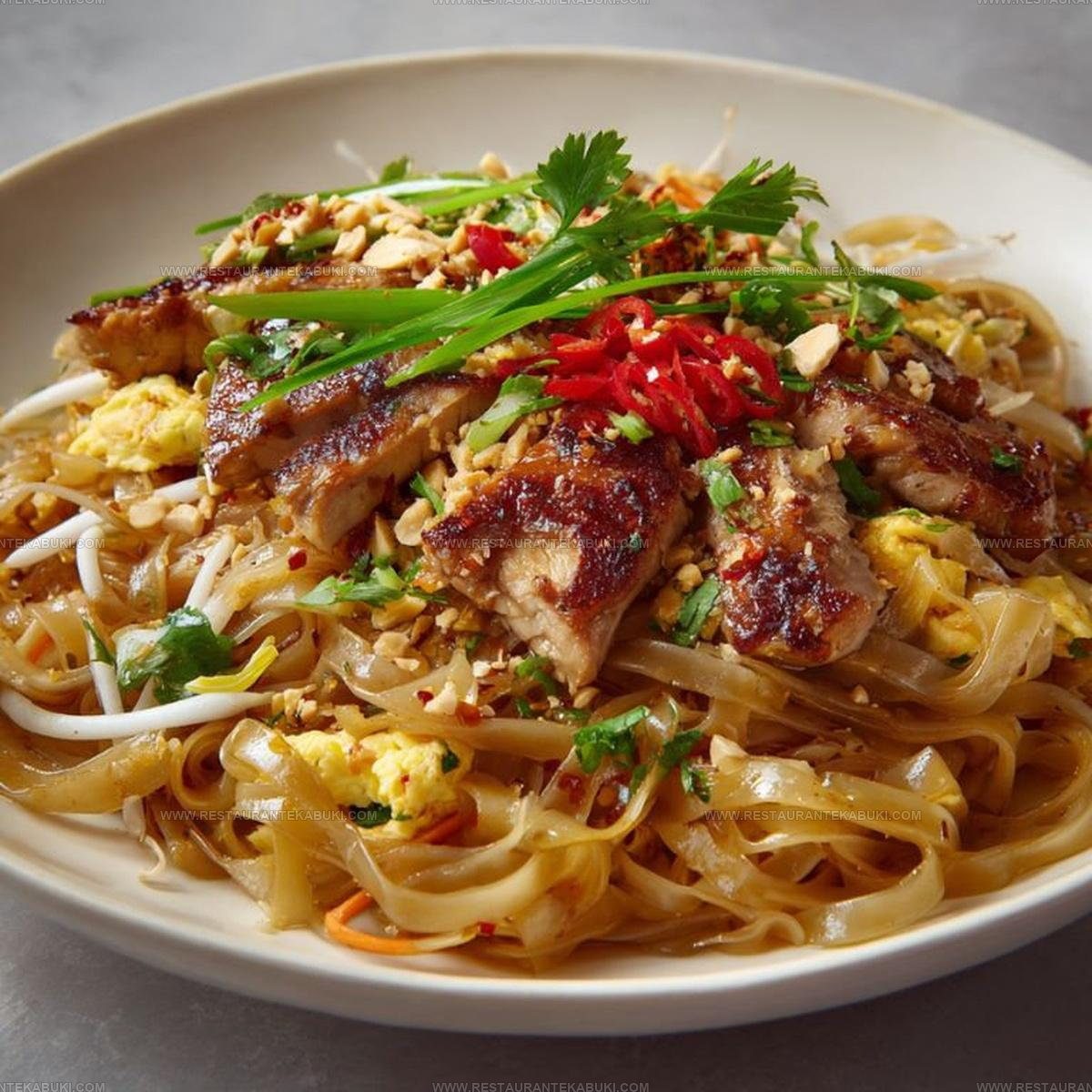
Pad Thai Recipe With Chicken Thighs And Big Flavor

Pad Thai with chicken thighs recipe brings comfort food to a whole new level when you crave something satisfying and full of bold flavors.
This dish has become a weeknight favorite for busy cooks who want something special without spending hours in the kitchen.
The balance of sweet, sour, and savory notes creates an unforgettable meal that feels like a treat every single time.
Street food culture inspired this beloved noodle dish that has won hearts across the globe.
Making it at home means you control exactly what goes into every bite while saving money compared to takeout.
The chicken thighs add richness and juiciness that makes every forkful more satisfying than the last.
Go make yourself a plateful tonight and see why so many people consider it their ultimate comfort meal.
The Allure Of Pad Thai with Chicken Thighs
Ingredient Guide for Pad Thai with Chicken Thighs
Protein:Noodles And Base:Sauce:Aromatics And Vegetables:Garnish And Finishing:Go To Tools For Pad Thai With Chicken Thighs
Structured Steps For Pad Thai with Chicken Thighs
Soften The Noodles
Place your 8 oz of flat rice noodles in a large bowl and pour very hot water over them until they’re completely submerged. Let them sit for 10-15 minutes until they become tender but still have a bit of firmness to them.
Drain the noodles in a colander and set them aside on a plate.
Mix Your Sauce Base
In a small bowl, combine these ingredients together by whisking them:
Taste what you’ve made and adjust the flavors to match what appeals to you.
Some people prefer it sweeter while others like more of a tangy kick.
Brown The Chicken
Heat 1 tablespoon of neutral oil in a large skillet over medium-high heat until it shimmers.
Add your 1 lb of thinly sliced boneless skinless chicken thighs to the pan and let them cook for 4-5 minutes until the outside turns golden brown and the meat is cooked all the way through. Transfer the cooked chicken to a clean plate and set it aside.
Cook The Eggs
Add the remaining 1 tablespoon of oil to the same skillet. Crack both of your large eggs directly into the pan and let them sit undisturbed for a few seconds so they start to set.
Then scramble and break them into smaller pieces as they cook, pushing them around until they’re mostly cooked through. Move the cooked eggs to the side of the pan.
Toast The Garlic
Add your 3 minced garlic cloves to the empty side of the skillet where the eggs were. Let them cook for about 30 seconds, stirring constantly so they become fragrant without burning.
Combine Everything In The Pan
Return the cooked chicken to your skillet along with the softened noodles, ½ cup of shredded carrots, and ¼ cup of green onions that have been sliced into 1-inch pieces. Toss everything together so it mixes evenly.
Add The Sauce And Cook
Pour all of your prepared sauce over the noodle mixture in the skillet. Using tongs or a spatula, gently toss everything together for 2-3 minutes so the sauce coats all the noodles evenly and reduces slightly.
Finish With Sprouts And Serve
Stir in your 1 cup of bean sprouts right before plating so they stay crisp and crunchy. Divide the pad thai among your serving plates and top each portion with ¼ cup of crushed roasted unsalted peanuts, a squeeze from your lime wedges, extra bean sprouts, and fresh cilantro if that sounds good to you.
Sprinkle Thai red chili flakes on top if you like heat.
What Easy Cooking Tips Help Pad Thai With Chicken Thighs
Custom Options for Pad Thai with Chicken Thighs
Ideal Serving Tips For Chicken Pad Thai
How To Store Pad Thai with Chicken Thighs Without Drying It Out
FAQs
Can I use chicken breasts instead of thighs?
Chicken breasts work, but thighs stay juicier and more flavorful when cooked quickly. If using breasts, slice them thin and watch closely so they don’t dry out.
What if I don’t have tamarind concentrate?
Use a squeeze of lime juice or a splash of rice vinegar to add that tangy flavor. The sauce won’t be exactly the same, but it tastes great.
Do the noodles really need to soak in hot water?
Yes, soaking softens them just right so they absorb the sauce without falling apart. Cold water takes much longer and doesn’t work as well.
Can I add other vegetables?
Absolutely, bell peppers, broccoli, snap peas, and mushrooms all work well. Add them with the garlic and cook for a minute before adding the noodles.
What does fish sauce do in this dish?
It adds depth and umami that makes the sauce taste authentic and savory. It might smell strong in the bottle, but it blends into the dish beautifully.
How do I know when the sauce is ready to pour?
Make it while the chicken cooks. The sauce should be smooth and well combined. Taste it before adding to adjust sweetness or tartness to your liking.
Pad Thai with Chicken Thighs Recipe
- Total Time: 27-29 minutes
- Yield: 4 1x
Description
Shortcut pad thai with chicken thighs gets dinner on your table fast with tender meat and that signature sweet-tangy sauce you crave. Chicken thighs stay juicy throughout cooking, making this weeknight meal something your family returns to again and again.
Ingredients
Protein:
- 1 lb boneless skinless chicken thighs, thinly sliced
- 2 large eggs
Noodles and Base:
- 8 oz flat rice noodles
- 2 tablespoons neutral oil
Sauce:
- 3 tablespoons fish sauce
- 2 tablespoons brown sugar
- 2 tablespoons rice vinegar
- 1 tablespoon soy sauce
- 1 tablespoon tamarind concentrate
- ½ teaspoon Sriracha
Aromatics and Vegetables:
- 3 garlic cloves, minced
- 1 cup bean sprouts
- ½ cup shredded carrots
- ¼ cup green onions, sliced into 1-inch pieces
Garnish and Finishing:
- ¼ cup crushed roasted peanuts
- 1 lime, cut into wedges
- fresh cilantro
- Thai red chili flakes
Instructions
- Soak 8 oz of flat rice noodles in a large bowl covered with very hot water for 10-15 minutes at room temperature until they soften without becoming mushy, then drain and set them aside for later.
- Combine 3 tablespoons fish sauce, 2 tablespoons brown sugar, 2 tablespoons rice vinegar, 1 tablespoon soy sauce, 1 tablespoon tamarind concentrate, and ½ teaspoon Sriracha in a small bowl and whisk until the sugar dissolves completely.
- Pour 1 tablespoon neutral oil into your skillet and heat it over medium-high heat until it shimmers, about 1 minute.
- Add 1 lb of thinly sliced boneless skinless chicken thighs to the hot skillet and cook for 4-5 minutes at medium-high heat, stirring occasionally, until the chicken turns golden brown and cooks through completely.
- Transfer your cooked chicken to a clean plate and keep it nearby.
- Add the remaining 1 tablespoon of neutral oil to the same skillet over medium-high heat and crack 2 large eggs directly into the pan.
- Let the eggs set for about 10 seconds, then scramble them continuously for 1-2 minutes at medium-high heat until they’re mostly cooked, pushing them to one side of your pan.
- Add 3 minced garlic cloves to the empty side of your skillet and let them cook for 30 seconds at medium-high heat until fragrant.
- Return your cooked chicken to the pan along with the drained noodles, ½ cup shredded carrots, and ¼ cup sliced green onions, stirring everything together over medium-high heat for about 1 minute.
- Pour your prepared sauce over all the ingredients in the pan and toss everything gently with tongs for 2-3 minutes at medium-high heat until the sauce coats the noodles and reduces slightly.
- Fold in 1 cup of bean sprouts at the very end, then transfer your pad thai to serving plates and top each portion with ¼ cup crushed roasted peanuts, lime wedges, extra sprouts, and cilantro if your family enjoys it.
Notes
- Soak your rice noodles just until soft; oversoak and they turn to mush, undersoak and they stay tough, so check them around the 10-minute mark.
- Brown sugar works better than regular sugar here because it dissolves smoothly into the sauce and adds a subtle depth that regular sugar can’t match.
- Cook your chicken thighs instead of breasts since they stay juicy and forgiving even if you cook them a minute or two longer than you intend.
- Taste your sauce before adding it to the pan so you can adjust the sweetness or heat to match your preference rather than being stuck with something that’s off.
- Prep Time: 15 minutes
- Cook Time: 12-14 minutes
- Category: Sautéed Chicken
- Method: Sautéing
- Cuisine: Thai
Nutrition
- Serving Size: 4
- Calories: 399 kcal
- Sugar: 8 g
- Sodium: 920 mg
- Fat: 18 g
- Saturated Fat: 4 g
- Unsaturated Fat: 13 g
- Trans Fat: 0 g
- Carbohydrates: 34 g
- Fiber: 3 g
- Protein: 30 g
- Cholesterol: 124 mg
Kaiden Poole
Co-Founder & Culinary Story Specialist
Expertise
Global Cuisine Inspiration, Cooking Techniques, Cross-Culture Fusion, Food Trends & Recipe Innovation, Flavor Storytelling, Food Writing, Creative Seasonal Menus
Education
- Program: Culinary Arts Certificate (Professional Cook 1 & 2)
- Focus: Fundamental kitchen techniques, food safety, menu planning, and real-world kitchen experience.
Online Gastronomy & Food Culture Courses (Various Platforms)Kaiden Poole brings global influence and culinary storytelling to the team. Based in Vancouver, BC, he earned his Culinary Arts Certificate from Vancouver Island University and expanded his knowledge through studies in gastronomy, nutrition, and sustainability. He focuses on cross-cultural flavors and creative fusion, crafting recipes that make international cuisine accessible to home cooks. For Kaiden, food is about curiosity, creativity, and connection around the table.