Spicy Kung Pao Chicken Recipe With Roasted Peanuts

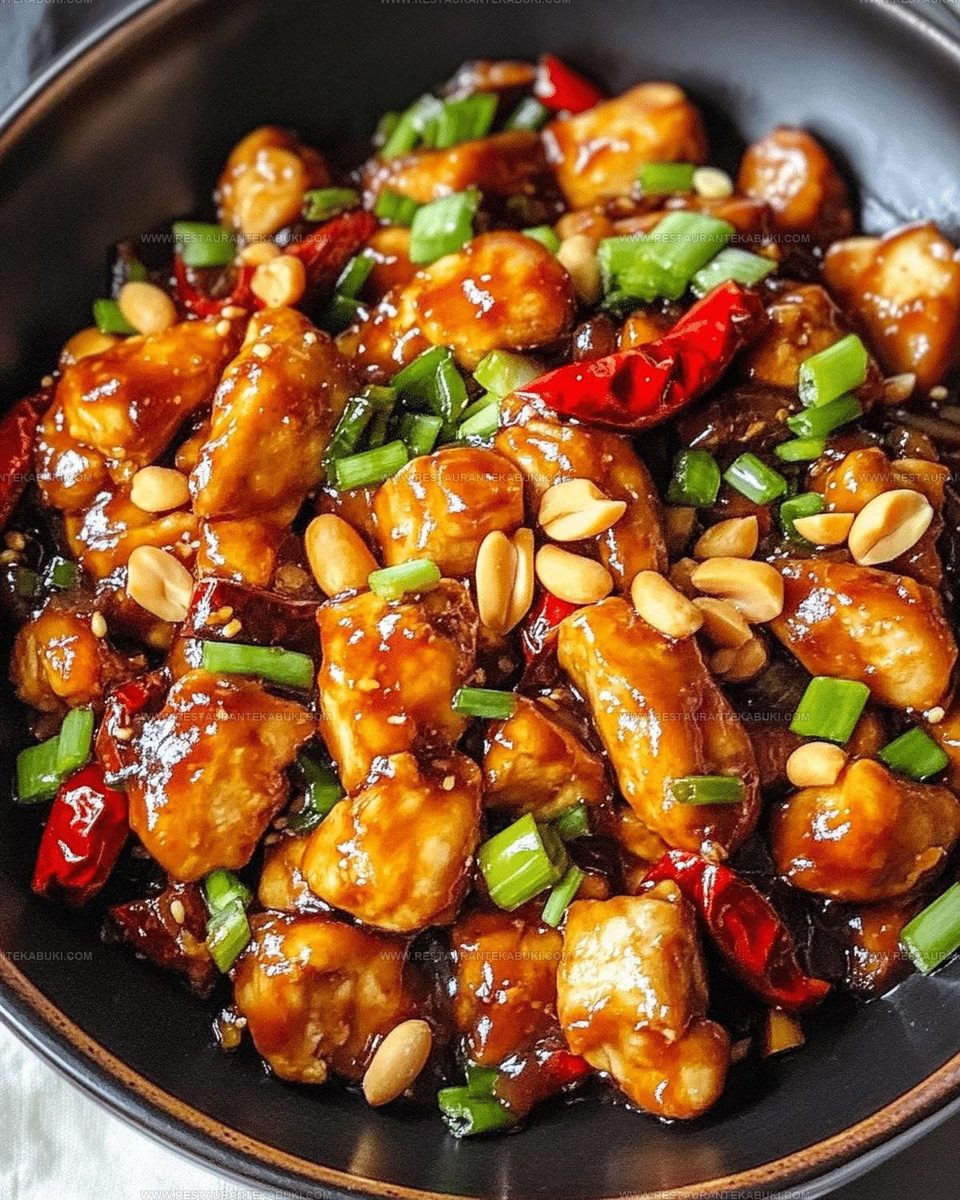
Kung pao chicken is one of those bold, satisfying dishes that has earned a permanent spot in kitchens worldwide.
Spicy, savory, and just a little sweet, it strikes a balance that keeps you coming back for more.
Rooted in Chinese cuisine, it carries a rich history that adds depth to every single bite.
Few dishes manage to pack so much personality into one pan while still feeling approachable for home cooks.
It suits a casual weeknight dinner just as well as a spread meant to impress.
The flavors are punchy yet balanced, making it a go-to choice for anyone who loves food with real character.
What Sets Kung Pao Chicken Apart
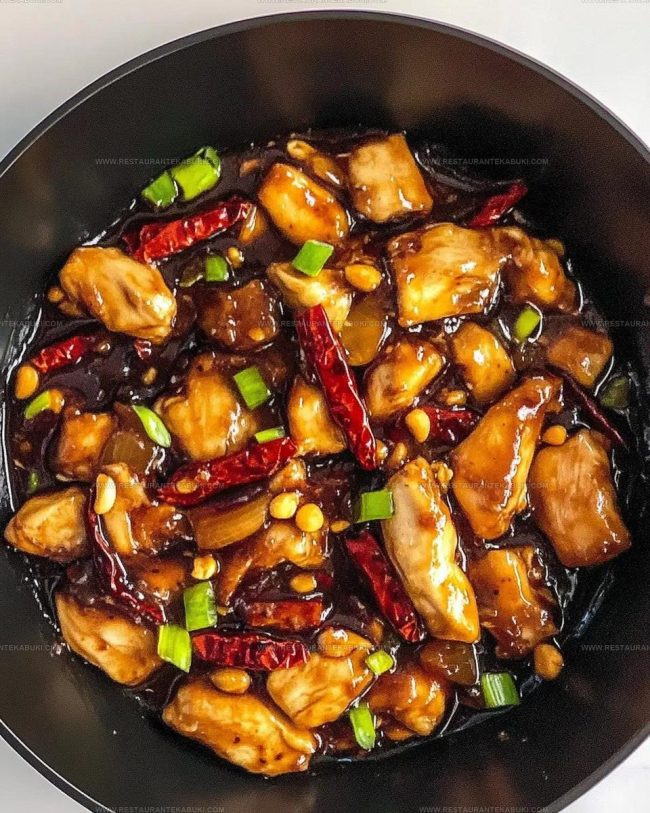
Which Ingredients Should Be Gathered Before Cooking Kung Pao Chicken
Chicken And Marinade:Kung Pao Sauce:Cooking Ingredients And Garnish:Which Tools Make Kung Pao Chicken Easier
How To Make Kung Pao Chicken
Coat The Chicken
In a large bowl, whisk together 1 tablespoon soy sauce, 1 tablespoon rice vinegar, and 2 teaspoons cornstarch. Take your 1 pound of boneless chicken cut into bite-sized pieces and toss them into this mixture until each piece is evenly covered.
Let the chicken sit while you handle the remaining prep work.
Mix Your Sauce Base
In a separate bowl, combine these ingredients for your sauce:
Stir everything together and set this bowl aside so it’s ready when you need it.
Prepare Your Ingredients For Cooking
Chop up 2 to 3 fresh chili peppers, slice 4 scallions into pieces, and mince 3 cloves of garlic. Having everything prepped and within arm’s reach keeps the cooking moving smoothly when things heat up.
Bloom The Dried Chilies
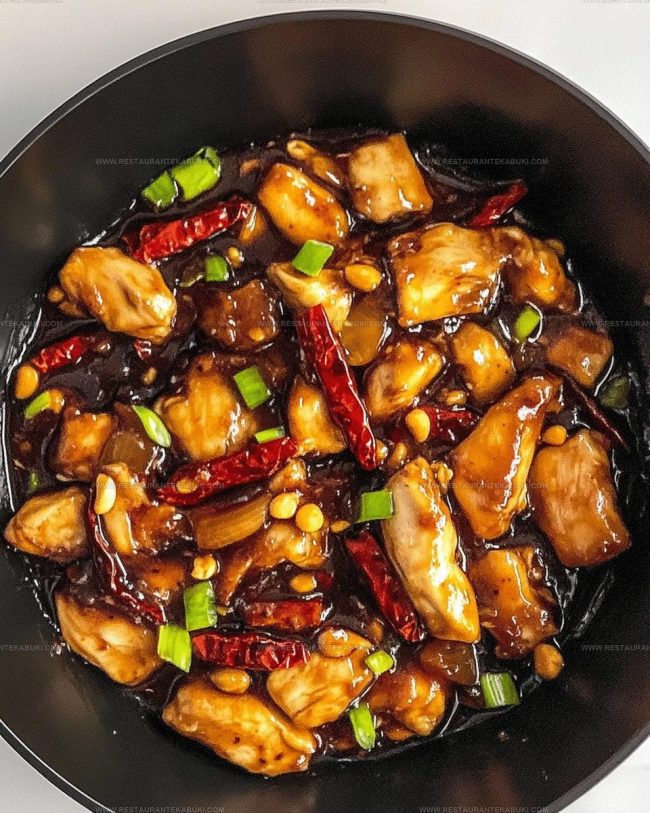
Heat 2 tablespoons of vegetable oil in a large pan or wok over medium-high to high heat until it shimmers. Add your 10 dried red chilies and the fresh chili peppers you chopped, stirring them around for about 1 minute until the kitchen smells fragrant and toasted.
Cook Your Chicken
Add the marinated chicken to the hot pan and stir-fry for 3 minutes at medium-high heat, breaking up the pieces as they cook and turning them frequently so every side gets cooked through evenly. The chicken should be nearly done at this point.
Add Your Aromatics
Toss in the scallions and garlic to the pan and keep stirring for 1 more minute until the garlic releases its smell into the dish.
Finish With Sauce And Peanuts
Pour the sauce you mixed earlier right into the pan along with 1/2 cup of roasted peanuts.
Stir everything together for 2 minutes at medium-high heat, letting the sauce coat all the chicken and peanuts while it thickens slightly and the flavors meld.
Garnish And Serve
Take the pan off the heat and transfer your kung pao chicken to a serving dish or directly onto your plates.
Sprinkle extra roasted peanuts on top, add more chopped scallions, and finish with a light shake of chili flakes for those who want more heat. Serve this hot alongside steamed rice or noodles.
How To Avoid Errors When Cooking Kung Pao Chicken
How Can Ingredients Be Swapped in Kung Pao Chicken
Delicious Matches for Kung Pao Chicken
Reliable Storage Advice For Kung Pao Chicken
FAQs
Can I use chicken breast instead of thighs?
Yes, chicken breast works fine for this dish. Breast meat cooks faster, so keep a close eye on it during stir-frying to prevent it from drying out. Thighs stay juicier, but breast is a leaner choice if that matters to you.
What’s the difference between light and dark soy sauce?
Light soy sauce is thinner and saltier, while dark soy sauce is thicker and has a deeper, slightly sweet flavor. Using both together gives the dish balanced seasoning and rich color. If you only have one type, regular soy sauce works in a pinch.
Do I need Sichuan peppercorns for authentic flavor?
Sichuan peppercorns add a unique tingling sensation that makes the dish special, but if your pantry doesn’t have them, regular black pepper gets the job done. The dish tastes different without them, but it’s still delicious.
Can I make the sauce ahead of time?
Yes, mixing the sauce ingredients earlier in the day saves time when you’re cooking. Just stir it again before pouring it into the pan, since the ingredients may separate as it sits.
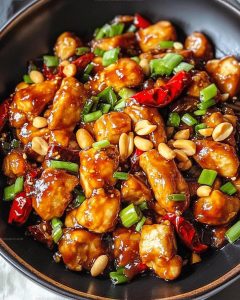
Kung Pao Chicken Recipe
- Total Time: 17 minutes
- Yield: 4 1x
Description
Easy kung pao chicken brings together tender chicken, roasted peanuts, and a tangy-spicy sauce that you toss together in one pan for a weeknight dinner that tastes like takeout. Bell peppers and green onions add crunch while the sauce coats everything in that savory-sweet flavor you crave without needing a wok or complicated techniques.
Ingredients
Protein:
- 1 pound boneless chicken, cut into bite-sized pieces
Marinade and Sauce:
- 1 tablespoon soy sauce
- 1 tablespoon rice vinegar
- 2 teaspoons cornstarch
- 2 tablespoons light soy sauce
- 1 tablespoon dark soy sauce
- 1 tablespoon Chinese black vinegar
- 2 teaspoons hoisin sauce
- 1 teaspoon sesame oil
- 1 teaspoon honey
- 1/2 teaspoon ground Sichuan peppercorns
- 1 teaspoon chili flakes
Main Ingredients and Garnish:
- 2 tablespoons vegetable oil
- 10 dried red chilies
- 2 fresh chili peppers, chopped
- 4 scallions, chopped
- 3 cloves garlic, minced
- 1/2 cup roasted peanuts
- 1/2 cup extra roasted peanuts
- 2 scallions, chopped
- 1 teaspoon spicy chili flakes
Instructions
- Combine 1 tablespoon soy sauce, 1 tablespoon rice vinegar, and 2 teaspoons cornstarch in a bowl, then toss your 1 pound of bite-sized chicken pieces in this mixture and let them sit while you prep everything else.
- Whisk together 2 tablespoons light soy sauce, 1 tablespoon dark soy sauce, 1 tablespoon Chinese black vinegar, 2 teaspoons hoisin sauce, 1 teaspoon sesame oil, 1 teaspoon honey, 1/2 teaspoon ground Sichuan peppercorns, and 1 teaspoon chili flakes in a separate bowl and set this aside.
- Heat 2 tablespoons vegetable oil in your wok or large pan over medium-high heat until it shimmers, then add 10 dried red chilies and 2-3 chopped fresh chili peppers.
- Let those chilies toast for about 1 minute until the kitchen smells fragrant and toasty.
- Add your marinated chicken to the pan and cook for 3 minutes at medium-high heat, stirring often so each piece cooks evenly.
- Once the chicken is nearly cooked through, stir in 4 chopped scallions and 3 minced garlic cloves and keep cooking for 1 minute more until the garlic becomes aromatic.
- Pour your prepared sauce over everything and add 1/2 cup roasted peanuts, then stir and cook for 2 minutes at medium-high heat until the sauce coats all the pieces and thickens slightly.
- Transfer to your serving dish and top with extra roasted peanuts, more chopped scallions, and a sprinkle of chili flakes before serving over rice or noodles.
Notes
- The cornstarch in your marinade helps create a light coating that keeps the chicken tender and gives it a subtle texture when it hits the hot pan.
- Toasting your dried chilies for that first minute releases their natural oils and deepens the flavor, so don’t skip this step even though it seems quick.
- Cook your chicken just until it’s nearly done before adding the sauce, since it continues cooking as everything simmers together and you don’t want it to dry out.
- If heat isn’t your thing, reduce the chili flakes and fresh peppers to suit your taste, or remove the seeds from the peppers for milder spice while keeping the flavor intact.
- For a gluten-free version, swap the soy sauces for tamari and make sure your hoisin sauce is certified gluten-free.
- Serve this over jasmine rice or with simple noodles to soak up the extra sauce, since that’s where a lot of the good flavor lives.
- Prep Time: 10 minutes
- Cook Time: 7 minutes
- Category: Stir-Fried Chicken
- Method: Stir-Frying
- Cuisine: Chinese
Nutrition
- Serving Size: 4
- Calories: 320 kcal
- Sugar: 4 g
- Sodium: 800 mg
- Fat: 20 g
- Saturated Fat: 3 g
- Unsaturated Fat: 15 g
- Trans Fat: 0 g
- Carbohydrates: 12 g
- Fiber: 2 g
- Protein: 28 g
- Cholesterol: 70 mg
Julia Simon
Founder & Head Recipe Curator
Expertise
Seasonal and Globally Inspired Recipes, Flavor Pairing & Ingredient Creativity, Comfort Food with a Modern Twist, Recipe Testing & Home Kitchen Strategy, Simple Weeknight Ideas, Weekend Feast Ideas
Education
- Program: Culinary Arts Certificate
- Focus: Hands-on culinary training including classic cooking techniques, kitchen safety, and menu prep in a professional kitchen environment.
Tri-C Culinary Arts – Cuyahoga Community CollegeBased in Asheville, NC, Julia Simon leads Restaurante Kabuki with a love for seasonal ingredients and practical, flavor-forward cooking. She trained in Culinary Arts at Tidewater Community College and Tri-C Culinary Arts, building strong skills in classic techniques, kitchen safety, and professional prep. Julia has created 300+ original recipes designed for real home kitchens. Her style blends global inspiration with modern comfort food, making everyday meals and special occasions equally inviting. She believes cooking should feel joyful, approachable, and worth sharing.