
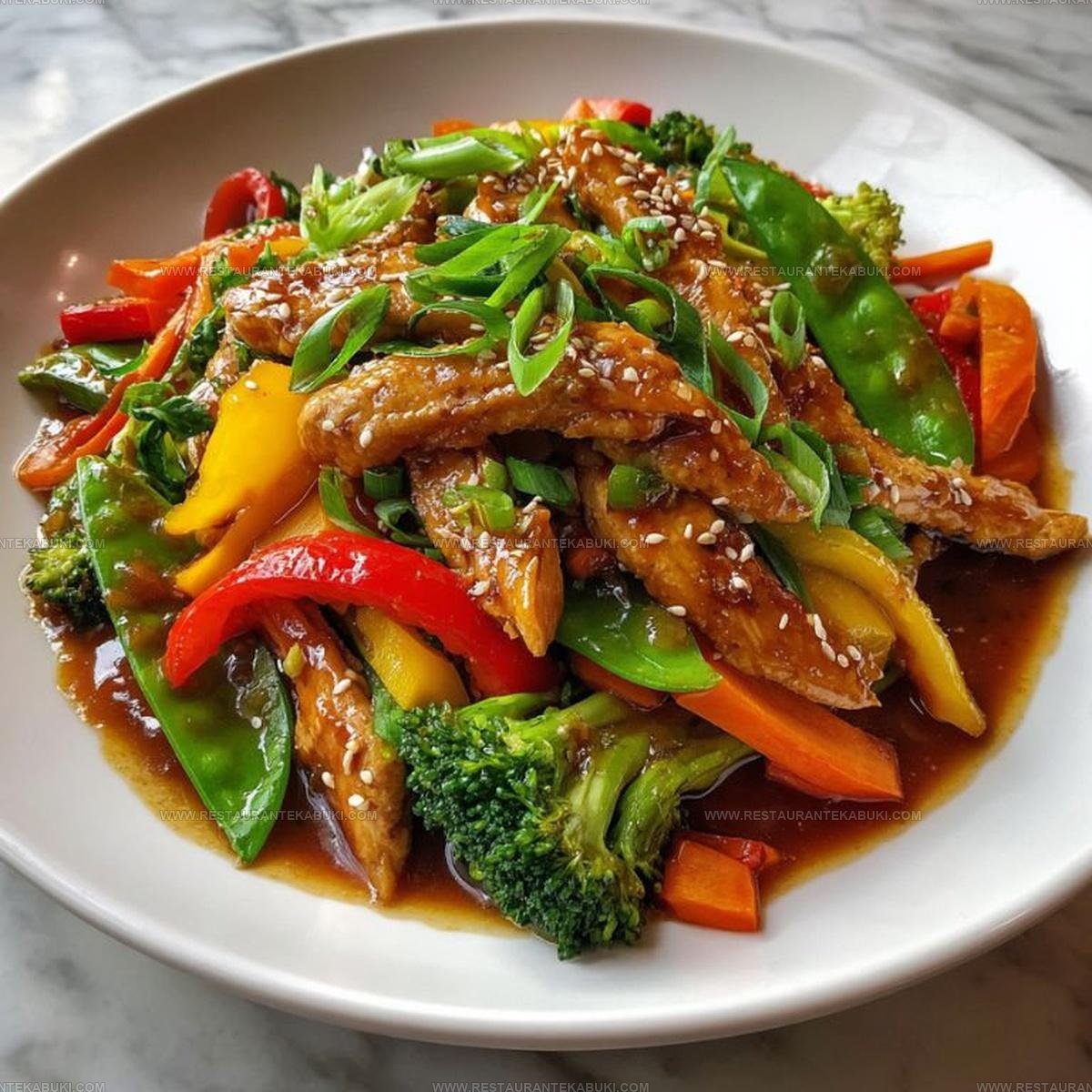
Chinese Imperial Chicken Recipe with Tender Vegetables

Chinese style imperial chicken with vegetables brings bold flavors and satisfying texty goodness to any dinner table.
Tender protein pairs beautifully with crisp produce in a savory sauce that makes weeknight meals feel special without requiring hours in the kitchen.
Families love how quickly everything comes together in one pan, creating less cleanup and more time to enjoy dinner.
The balance of colors and textures makes every bite exciting, while the aromatic sauce coats everything perfectly.
Preparing a homemade version means controlling exactly what goes into each serving, making it healthier than takeout alternatives.
Learning to cook restaurant favorites at home saves money and impresses everyone at mealtime.
Check out the full recipe below and make tonight's dinner something everyone will request again and again.
What Makes Imperial Chicken Worth Making
Which Ingredients Need Checking for Chinese Style Imperial Chicken with Vegetables
Chicken And Marinade:The Sauce:The Stir-Fry:What Tools Support Chinese Style Imperial Chicken
Preparation Steps For Chinese Style Imperial Chicken with Vegetables
Marinate The Chicken
In a medium bowl, combine 1.5 pounds of boneless, skinless chicken breasts that are cut into thin bite-sized strips with ingredients for marinating:
Toss everything together until the chicken gets an even coating, then set the bowl aside for at least 10 minutes while the flavors soak in and the cornstarch helps create that silky texture.
Prepare The Sauce
In a separate bowl, whisk together all your sauce ingredients until the mixture is completely smooth:
Set this bowl to the side so it’s ready when you need it.
Slice And Prep The Vegetables
Cut 1 red bell pepper and 1 yellow bell pepper into thin strips, chop 1 medium carrot into thin matchstick pieces, measure out 1 cup of broccoli florets, and place 1/2 cup of snow peas or sugar snap peas in a separate area on your cutting board. Mince 3 garlic cloves and grate 1 teaspoon of fresh ginger into small bowls.
Slice 2 scallions and keep the white and green parts separated on your cutting board.
Cook The Chicken
Heat your wok or large skillet over medium-high heat until it’s hot, then add 1 tablespoon of neutral oil.
Once the oil starts to shimmer, carefully place the marinated chicken pieces in a single layer across the bottom. Let the chicken sit undisturbed for about 2 minutes to develop color, then stir and cook for another 2 to 3 minutes until the pieces are browned on the outside and cooked through.
Transfer the cooked chicken to a clean plate.
Stir-Fry The Vegetables
Pour the remaining 1 tablespoon of oil into the same pan and let it heat for a few seconds.
Add the minced garlic, grated ginger, and the white parts of the scallions, stirring constantly for about 30 seconds until the kitchen smells fragrant. Now add the bell pepper strips, carrot matchsticks, and broccoli florets, tossing everything continuously for 2 to 3 minutes.
Add the snow peas and cook for another 1 to 2 minutes, stirring frequently so the vegetables stay crisp and vibrant.
Bring Everything Together
Return your cooked chicken to the pan, then pour the prepared sauce over the top.
Toss everything gently so each piece of chicken and vegetable gets coated in the glossy sauce. Let the mixture cook for 1 to 2 minutes while the sauce thickens and clings to all the ingredients.
Plate And Finish
Divide your cooked jasmine or white rice among serving bowls or plates, then spoon the chicken and vegetables with sauce over the top. Sprinkle the green parts of the sliced scallions and some toasted sesame seeds across each serving.
Chinese Style Imperial Chicken Tips For Better Results
What Classic Variations Fit Imperial Chicken?
Creative Ways To Serve Imperial Chicken
Proper Storage Steps for Chinese Style Imperial Chicken with Vegetables
FAQs
Can I use chicken thighs instead of chicken breasts?
Yes, thighs work great and stay juicy. They take about the same cooking time, so just keep an eye on them to make sure they’re cooked through.
What if I don’t have Shaoxing wine?
Dry sherry or even a splash of soy sauce mixed with a little sugar gives a similar result. The marinade just won’t have that exact depth, but it’ll still taste good.
Is hoisin sauce necessary, or can I skip it?
Hoisin gives the sauce its signature sweetness and slight earthiness. If you really don’t have it, a mix of soy sauce and a bit of sugar helps, but the flavor changes some.
Do the vegetables have to be cut the same size?
It helps them cook evenly, so try to keep them roughly similar. Smaller pieces cook faster, so adjust your timing if some are much bigger than others.
Can I prep everything ahead of time?
The chicken and sauce can sit in the fridge for a few hours before cooking. Just keep the cut vegetables separate so they don’t get soggy.
Chinese Style Imperial Chicken with Vegetables Recipe
- Total Time: 20-22 minutes
- Yield: 4 1x
Description
When you make chinese style imperial chicken with vegetables, you’re creating a dish that balances tender poultry and crisp vegetables in one satisfying meal. This combination gives you authentic flavors that come together quickly on your stovetop.
Ingredients
Chicken and Marinade:
- 1.5 pounds boneless skinless chicken breasts, cut into thin bite-sized strips
- 2 tablespoons low-sodium soy sauce
- 1 tablespoon Shaoxing wine
- 1 teaspoon sesame oil
- 1 tablespoon cornstarch
Sauce:
- 2 tablespoons hoisin sauce
- 1 tablespoon oyster sauce
- 2 tablespoons soy sauce
- 1 tablespoon honey
- 1 tablespoon rice vinegar
- 2 teaspoons chili garlic sauce
- 1/4 cup chicken broth
- 1 teaspoon cornstarch
Stir-Fry:
- 2 tablespoons neutral oil
- 1 red bell pepper, sliced into thin strips
- 1 yellow bell pepper, sliced into thin strips
- 1 cup broccoli florets
- 1 medium carrot, julienned or thinly sliced
- 1/2 cup snow peas
- 3 garlic cloves, minced
- 1 teaspoon fresh ginger, grated
- 2 scallions, sliced with white and green parts separated
- 2 tablespoons toasted sesame seeds
- 2 cups cooked jasmine rice
Instructions
- Toss your 1.5 pounds of sliced boneless, skinless chicken breasts with 2 tablespoons soy sauce, 1 tablespoon Shaoxing wine, 1 teaspoon sesame oil, and 1 tablespoon cornstarch in a bowl. Let the chicken rest for at least 10 minutes while you prepare everything else.
- Whisk together 2 tablespoons hoisin sauce, 1 tablespoon oyster sauce, 2 tablespoons soy sauce, 1 tablespoon honey, 1 tablespoon rice vinegar, 2 teaspoons chili garlic sauce, 1/4 cup chicken broth, and 1 teaspoon cornstarch in a separate bowl until the mixture is completely smooth.
- Heat your wok or skillet to medium-high temperature and add 1 tablespoon of neutral oil. Once the oil shimmers at medium-high heat, place your marinated chicken in a single layer and stir-fry for 4 to 5 minutes until browned and nearly cooked through, then transfer it to a plate.
- Pour the remaining 1 tablespoon of oil into your pan and immediately add 3 minced garlic cloves, 1 teaspoon grated fresh ginger, and the white parts of 2 sliced scallions, cooking at medium-high heat for about 30 seconds until fragrant.
- Add 1 cup broccoli florets, 1 julienned medium carrot, and 1 red bell pepper plus 1 yellow bell pepper cut into thin strips to your pan at medium-high heat, stir-frying for 2 to 3 minutes before adding 1/2 cup snow peas and cooking for another 2 minutes until the vegetables are vibrant and crisp-tender.
- Return your cooked chicken to the pan at medium-high heat, pour the sauce over everything, and let it simmer for 1 to 2 minutes until glossy and thickened.
- Plate your chicken and vegetables over warm jasmine or white rice, then top with the green parts of your 2 scallions and a sprinkle of toasted sesame seeds.
Notes
- The cornstarch in both the marinade and sauce is essential because it creates that silky coating on the chicken and helps thicken the sauce to the right consistency, so don’t skip either one.
- Keep your vegetables cut to similar sizes so they cook evenly and maintain that crisp-tender texture that makes this dish so satisfying.
- If you’re cooking for a gluten-free diet, swap the soy sauce and oyster sauce for tamari and gluten-free oyster sauce, and the rest of the recipe works perfectly without any adjustments.
- Add the vegetables in stages based on how long they take to cook; this way your broccoli and carrots won’t turn mushy while waiting for the snow peas to soften.
- Prep Time: 10 minutes
- Cook Time: 10-12 minutes
- Category: Stir-Fried Chicken
- Method: Stir-Frying
- Cuisine: Chinese
Nutrition
- Serving Size: 4
- Calories: 288 kcal
- Sugar: 9 g
- Sodium: 580 mg
- Fat: 11 g
- Saturated Fat: 1.5 g
- Unsaturated Fat: 8.5 g
- Trans Fat: 0 g
- Carbohydrates: 17 g
- Fiber: 3 g
- Protein: 32 g
- Cholesterol: 85 mg
Kaiden Poole
Co-Founder & Culinary Story Specialist
Expertise
Global Cuisine Inspiration, Cooking Techniques, Cross-Culture Fusion, Food Trends & Recipe Innovation, Flavor Storytelling, Food Writing, Creative Seasonal Menus
Education
- Program: Culinary Arts Certificate (Professional Cook 1 & 2)
- Focus: Fundamental kitchen techniques, food safety, menu planning, and real-world kitchen experience.
Online Gastronomy & Food Culture Courses (Various Platforms)Kaiden Poole brings global influence and culinary storytelling to the team. Based in Vancouver, BC, he earned his Culinary Arts Certificate from Vancouver Island University and expanded his knowledge through studies in gastronomy, nutrition, and sustainability. He focuses on cross-cultural flavors and creative fusion, crafting recipes that make international cuisine accessible to home cooks. For Kaiden, food is about curiosity, creativity, and connection around the table.